The Application Techniques
Every workshop using the LEGO® SERIOUS PLAY® method is assembled from these seven techniques, each one building on the last. All of them run on the same core process.
-
Building Individual Models
The simplest technique: each participant builds their own personal model. It's also the most critical, because it's the first technique used in every workshop and a prerequisite for all the others. To build a shared model or create a landscape, participants first need their own individual models.
-
Building Shared Models
Participants work together to create a single model, often using components from their individual models. A shared model can represent a team's shared understanding of a problem, or a shared vision for a solution.
-
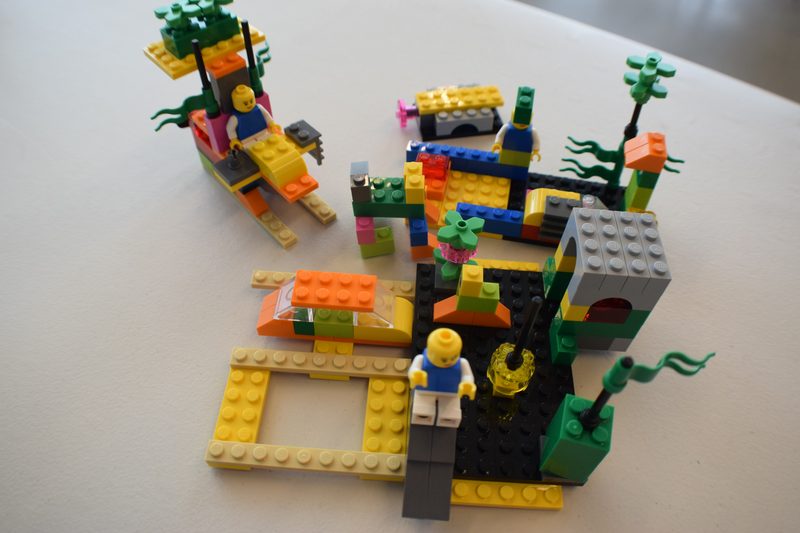
Creating a Landscape
Participants place their individual models into a common space. In a landscape, where models sit relative to one another matters — distance, for example, can represent how closely things are related.
-
Making Connections
A great way to add context to a landscape. Participants make physical connections between models to demonstrate how they relate to each other.
-
Building a System
Similar to connections, but here how models are connected also matters. Tightly coupled models might use a rigid LEGO® element; a more flexible relationship calls for a flexible one.
-
Playing Emergence and Decisions
Participants manipulate elements in the system to explore "what if" questions. Raise, lower or move one part, and you can observe how the rest of the system responds.
-
Extracting Simple Guiding Principles
This helps teams identify the statements or beliefs that are core to their team or their process. By observing connections and systems, and playing emergence and decisions, participants surface the underlying truths that guide them through future decisions.